The average settlement for a broken bone in a car accident usually lands above a soft tissue claim and below a back or brain case, because a fracture shows up on imaging, and imaging is what turns pain into proof. There is no single national figure. Honest sources give ranges, not verdicts, and anyone who quotes you one exact number is guessing. What the payout really tracks is not the label on the harm but how well it is documented and how your state splits fault.
This guide breaks the money down by the kind of harm you suffered: broken bones, whiplash and other soft tissue strains, back and spinal damage, concussion and traumatic brain injury, and the property-only fender bender where nobody got hurt. For each, you get the factors that move the figure and an illustrative range tied to a method, so you can see where your own facts might land.
Typical payout ranges by injury type
Here is the short version, comparing the five common categories. The ranges below are illustrative, not promises. They come from a single, transparent method rather than cherry-picked jury awards: value the pain-and-suffering piece as a severity score times documented medical costs, then add lost wages and other economic losses on top. Low bills and thin records push you to the bottom of a band. Objective imaging, surgery, a permanent impairment rating, and clean liability push you toward the top.
| Type of harm | What drives the number | Severity score (rough) | Illustrative total range |
|---|---|---|---|
| Broken bone (fracture) | Imaging proof, whether surgery and hardware were needed, healing time, any permanent limit | 2x to 4x | Low five figures for a simple cast; mid five to low six figures for a surgical fracture |
| Soft tissue and whiplash | Length of treatment, consistency of records, lingering symptoms; no imaging to lean on | 1.5x to 2.5x | A few thousand up to the low five figures for most fully healed cases |
| Back and spinal | Herniation on MRI, injections or fusion surgery, permanent impairment rating | 3x to 5x | Mid five figures into six figures when surgery or permanence is documented |
| Concussion and TBI | Neurological findings, cognitive testing, treated symptoms, effect on work and family | 2x to 5x | Low five figures for a resolved concussion; six figures and up for lasting deficits |
| Non-injury (property only) | Repair cost or vehicle value, rental, diminished value; no pain-and-suffering piece at all | None | Repair or actual cash value plus documented out-of-pocket costs |
Notice the bottom row has no multiplier. That is the whole story of why type matters, and the next section explains it.
Estimate your own number
Rather than guess where you fall in a band, run your real facts. Estimate yours with the calculator below. It builds a severity score from the four factors adjusters actually weigh, values the pain piece on it, adds your economic losses, and applies your state’s fault rule.
Accident Injury Calculator
Start from the injury, not the paperwork. Score how badly you were hurt on the four factors claim-evaluation software actually weighs (objective findings, treatment course, permanence, documented life impact) and watch the severity score build your pain-and-suffering value in the open. Add what the injury cost you, apply your state's real fault rule, and see the whole claim with take-home included.
Educational estimate, not legal advice. The math is the standard adjuster framework worked in the open: a severity score built from documented value drivers (base 1.5 plus the four factors, capped at 5) multiplies medical costs to value pain and suffering (or a per-diem daily rate through maximum medical improvement) then economic damages add on and your state's negligence rule reduces the total, with the contingency fee applied to what is recovered. For scale, the typical personal injury settlement runs near $48,855 across more than 9,500 recorded cases, with objective injuries, formal impairment ratings, and clean liability pushing well above it and undocumented soft-tissue claims landing below. The lessons inside the factors are the real product: imaging turns pain into evidence, treatment gaps read as recovery, a formal AMA impairment rating is the largest single lever a claimant controls, and life impact counts only when charted. State rules reflect mid-2026 law and change. Verify yours. In no-fault states, pain and suffering requires crossing the serious-injury threshold. Statutes of limitations run one to six years by state, and evidence ages faster than deadlines. Talk to a personal injury attorney before giving a recorded statement or accepting any offer; consultations are free and fees are contingent.
You can open the full tool on the accident injury calculator page, and for the big-picture average across all types, see our breakdown of the average car accident settlement amount.
Why the type of harm drives the payout
Type matters because insurers do not price your pain by how much it hurt. They price it by how much of it can be proven. Most claims value the non-economic piece with a multiplier method: take the documented medical costs and multiply them by a severity score, usually somewhere between about 1.5 and 5. That score is where the type of harm lives.
- Objective findings lift the score the most. A fracture, herniation, or tear that appears on an X-ray or MRI is hard to argue with. Self-reported aches are easy to dispute.
- Treatment course matters next. Six months of physical therapy and injections reads as a real problem. One ER visit and no follow-up reads as recovery.
- Permanence is the single biggest lever you control. A formal impairment rating under the AMA Guides tells the software the harm never fully resolved.
- Life impact counts only when it is charted: the job you lost, the sleep, the anxiety behind the wheel.
A broken bone starts with a built-in advantage on the first factor, because it is objective by definition. Whiplash does not, which is why two people in equal pain can walk away with very different checks.
Average settlement for a broken bone in a car accident
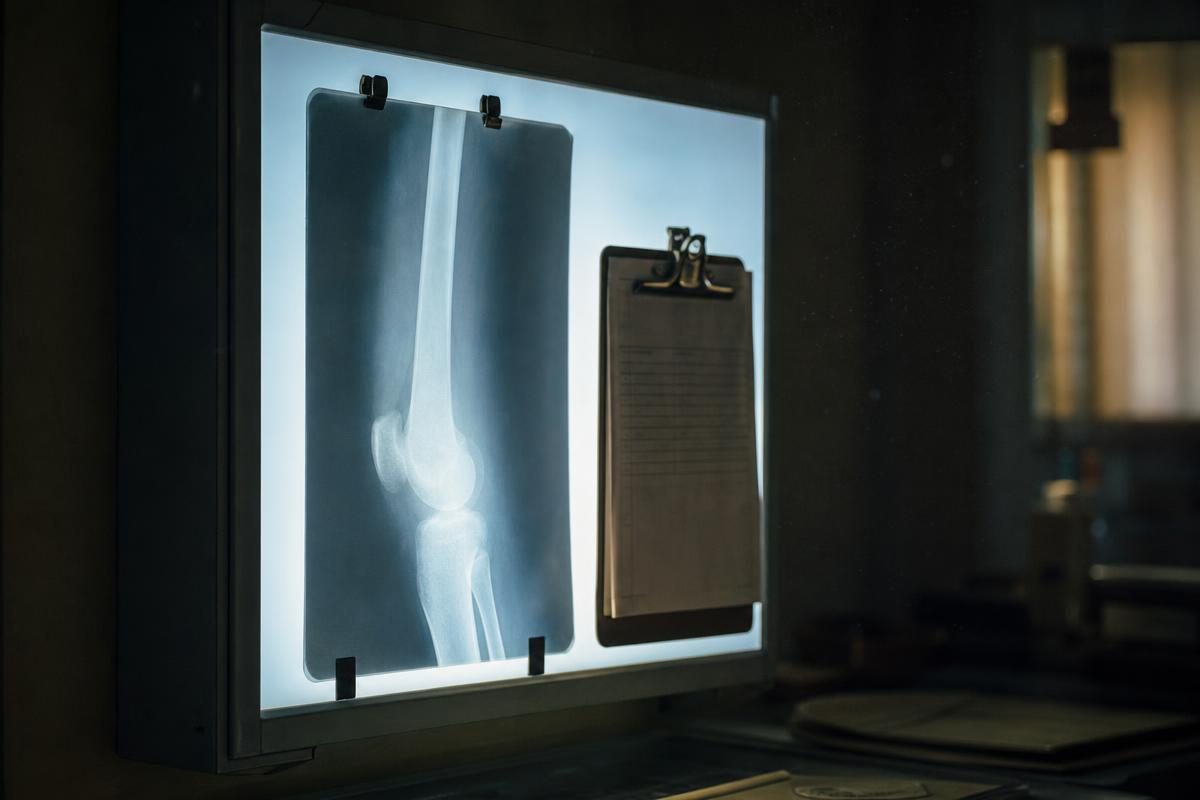
The average settlement for a broken bone in a car accident spans a wide gap, from the low five figures for a clean break healed in a cast to the low six figures for a surgical fracture that needed pins, plates, or a rod. The fracture itself is only half the math. The other half is what it cost you and what it left behind.
Walk it through the method. A wrist fracture with roughly $10,000 in bills, no surgery, and a full recovery might carry a score near 2.5x, putting the pain piece around $25,000 before you add lost wages. A tibia fracture requiring surgery, hardware, and months on crutches carries higher bills and a higher score, often 3x to 4x, and the total climbs into six figures once future care and a possible impairment rating are counted. A break that leaves a permanent limp or arthritis is worth more still, because permanence is documented, not guessed.
One practitioner note: people underprice healed fractures by forgetting the hardware. If a plate is coming out in a second surgery next year, that future cost belongs in the number now, because a signed release cannot be reopened when the second bill arrives.
Soft tissue and whiplash settlement amounts
A soft tissue injury settlement is usually the smallest of the injury categories, because strains and sprains do not show on imaging. Most fully healed cases resolve for a few thousand dollars up into the low five figures. The whiplash settlement amount follows the same logic: it rides almost entirely on how long and how consistently you treated.
Whiplash is the classic soft tissue neck strain, and adjusters see it constantly, so they discount it by reflex. Three weeks of care and a quick recovery sits at the bottom. Four to six months of documented physical therapy, a consistent complaint at every visit, and lingering stiffness at maximum improvement can lift the same neck strain into the low five figures. Gaps in treatment are the killer here. Every missed appointment reads as proof you got better.
If symptoms persist past a few weeks, ask about imaging. An MRI that catches a small disc bulge behind the strain moves you off the soft tissue table entirely and onto the spinal one, and that changes the score.
Back, spinal, and concussion cases
A back injury settlement runs higher than a fracture on average, because spinal harm often means permanence. A herniated disc confirmed on MRI, treated with injections or a fusion, carries a score of 3x to 5x, and the total moves from the mid five figures into six figures when surgery or a permanent rating is on record. A soft strain that clears up in weeks sits far below that, so the phrase covers a huge spread.
Concussion and traumatic brain injury are the hardest to price, because the harm can be invisible and permanent at once. A concussion that resolves in a few weeks looks like the low five figures. Documented cognitive deficits, personality changes, or an inability to return to the same work push a TBI into six figures and beyond. Neuropsychological testing is to a brain case what an MRI is to a back case: it turns a symptom into a finding.
For how the pain piece specifically gets valued across these severities, our pain and suffering settlement examples walk through worked scenarios.
The average settlement for a non-injury car accident
The average settlement for a non-injury car accident is not really a settlement in the personal injury sense at all. When nobody is hurt, there is no pain-and-suffering piece and no multiplier. You are owed the cost to make your property whole, and little else.
- Repair cost if the vehicle can be fixed, or its actual cash value if it is totaled.
- Diminished value, the lost resale worth of a repaired car, in states that recognize it.
- Rental and out-of-pocket costs while your car is in the shop.
That is why a property-only claim of a few thousand dollars can sit beside a six-figure spinal case from the exact same crash. The difference is not the impact. It is whether a body was hurt and how well that harm was recorded.
What moves your number within any type
Two people with the same fracture rarely get the same check. Inside every category, a handful of levers decide where you land:
- Documentation. Imaging, consistent treatment, and a charted account of how the harm changed your daily life. Undocumented pain is worth close to zero.
- A formal impairment rating. The largest single move a recovering claimant controls. Ask your doctor before you settle.
- Fault and your state. Comparative negligence trims your recovery by your share of blame, and a few states bar it entirely if you are even slightly at fault.
- Insurance limits. A strong case is capped by the at-fault driver’s policy unless there are other pockets to reach.
- Representation. Represented claims tend to settle for enough more that the contingency fee often pays for itself, per industry claim data.
For scale, industry claim datasets put the typical personal injury payout near the high $40,000s across thousands of recorded files, but that blended average hides everything this page is about. Your type of harm, and your paperwork, decide where inside the spread you actually sit.
Put your own facts in and get an estimate
Averages are a starting line, not an answer. The average settlement for a broken bone in a car accident, or for whiplash, a back strain, or a property-only crash, only tells you the neighborhood. To see your neighborhood, run your medical costs, treatment course, impairment status, and state through the accident injury calculator. Then, before you sign anything, get a free consultation with a personal injury attorney, because the tool estimates and a lawyer negotiates.
Frequently asked questions
What is the average settlement for a broken bone in a car accident?
There is no single figure. A simple fracture healed in a cast often resolves in the low five figures, while a surgical break with hardware and a long recovery can reach the low six figures. The number tracks your documented medical costs, healing time, any permanent limit, and your share of fault.
How much is a whiplash settlement amount worth?
Most fully healed whiplash cases resolve for a few thousand dollars up to the low five figures. Because a neck strain does not appear on imaging, the figure depends heavily on how long and how consistently you treated. Gaps in care lower it sharply.
Why is a soft tissue injury settlement lower than a fracture?
Soft tissue strains cannot be seen on an X-ray or MRI, so they are easy to dispute and get a lower severity score. A fracture is objective by definition, which lifts the multiplier and, with it, the pain-and-suffering piece of the payout.
Can you get a settlement for a non-injury car accident?
Yes, but it covers property only: repair cost or the vehicle’s actual cash value, diminished value where recognized, and rental or out-of-pocket costs. With no bodily harm, there is no pain-and-suffering component, so the amounts stay far below injury claims.
Does a back injury settlement pay more than a broken bone?
Often, yes, when the spinal harm is permanent. A herniated disc treated with injections or fusion carries a higher severity score than a fracture that fully heals, so it can reach six figures. A minor back strain that clears up quickly, though, pays less than a surgical fracture.